

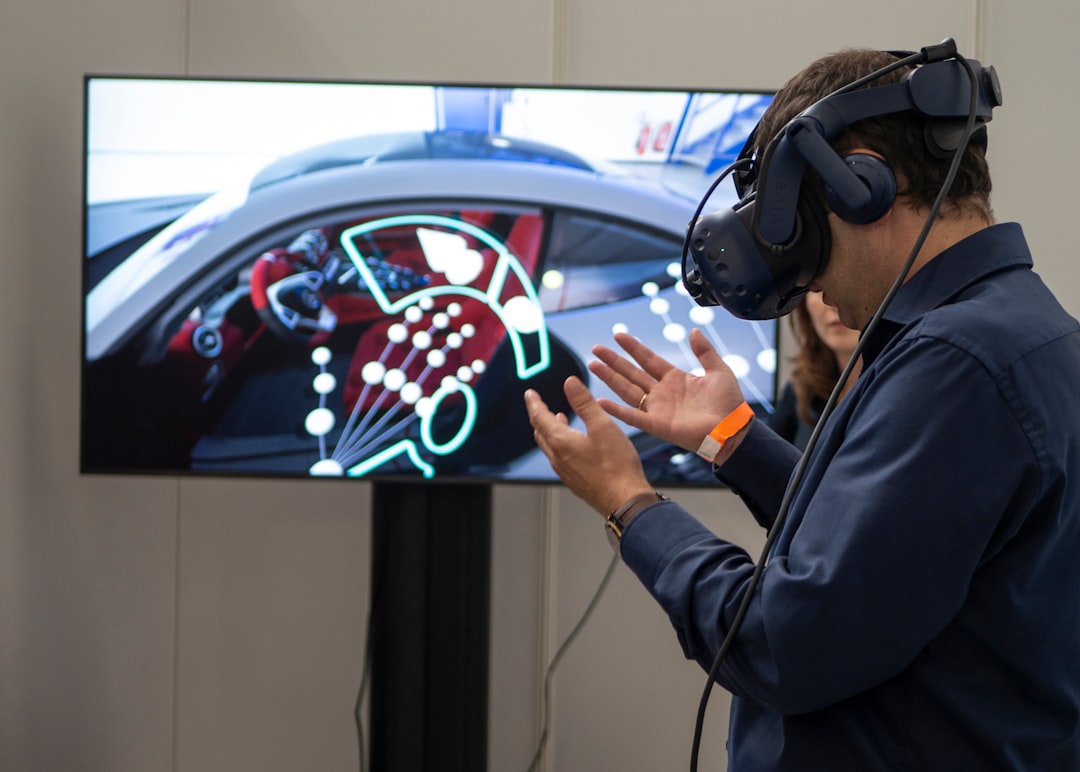
A Technology Whose Time May Finally Have Arrived
Imagine taking students to Ancient Rome in the morning, visiting a hospital ward after lunch, and exploring a future city shaped by climate adaptation before the end. For many educators, these experiences once seemed unfeasible. However, advancements in technology, such as 360-degree video, VR Cinema, digital twins, and virtual environments, are now opening these learning opportunities in ways unimaginable just a few years ago.
The educational potential of immersive technologies is not new. Researchers have explored virtual reality, simulations, and virtual environments for decades. What is changing, however, is accessibility. Affordable 360-degree cameras, standalone virtual reality headsets, simplified production workflows, and AI tools, are reducing barriers to adoption and opening new opportunities for educators.
As these technologies continue to become more accessible, it may be time to reconsider how they can support learning across higher education and beyond. The question is no longer whether immersive experiences are possible. Instead, it is how educators might use them to help students explore places, histories, and futures that would otherwise remain out of reach.
What Do We Mean by VR Cinema and Virtual Environments?
Discussions around immersive technologies often use terms such as virtual reality, VR Cinema, 360-degree video, digital twins, and virtual environments interchangeably. While they are related, they represent different approaches to creating immersive experiences.
At one end of the spectrum is 360-degree video. These experiences capture real environments and allow learners to look around freely from a fixed position. VR Cinema often builds upon this approach by placing learners inside immersive stories, guided experiences, or simulations that can be viewed through a headset, computer, or mobile device.
Further along the spectrum are fully interactive virtual environments where learners can move through digital spaces, interact with objects, and engage with other users. These may include digital twins of real-world locations, reconstructed historical environments, or entirely imagined future worlds.
For educators, the particular technology matters less than the educational opportunities it provides. Whether employing 360-degree video, VR Cinema, or virtual environments, these tools share a common objective: to provide access to experiences, environments, and contexts that would otherwise be hard, expensive, risky, or impossible to experience.
From Virtual Worlds to Educational Possibilities
A few years ago, I delved into using virtual environments as exhibition spaces for student projects through an initiative called Metabitions. The goal was to remove barriers related to geography, attendance, and physical space by developing virtual exhibitions accessible from any location. I also created a sample exhibition showcasing my own drone photography and videos, which you can visit at https://www.spatial.io/s/McDonalds-Lunar-New-Year-Experience-63bb3736f2513ed236ed3162?share=2851783860039212846.
The questions I raised then continue to shape discussions about immersive learning today. What has changed is the accessibility of the tools. Rather than requiring specialist teams to build complex virtual worlds, educators can increasingly create immersive experiences using technologies that are affordable, portable, and relatively easy to use. A device that fits in a pocket can now capture experiences that once required significant technical expertise and institutional investment. Thankfully, this is seeing the conversation shift from technological possibility to educational practicality.
Reimagining the Educational Excursion
A key application of immersive technologies is in educational excursions. Field trips are valued for their ability to give students direct engagement with environments and contexts that can’t be recreated in a classroom. However, such trips are frequently limited by factors like costs, travel logistics, accessibility issues, scheduling conflicts, and risk management concerns.
Immersive technologies provide an alternative way for students to explore remote ecosystems, cultural heritage sites, international institutions, community organisations, or workplaces without leaving campus. Although these experiences can not fully replace physical trips, they can enhance and supplement traditional excursions, improve accessibility, and offer opportunities for students who might never otherwise encounter these environments.
Unlike traditional excursions, immersive experiences can be revisited repeatedly. Students can return to locations before assessments, revisit environments during class discussions, or explore spaces at their own pace. Learning becomes less dependent on a single event and more integrated into the broader educational experience.
Extending Access to Learning Spaces
The potential goes beyond excursions. Many educational venues, such as laboratories, simulation centres, workshops, health facilities, museums, libraries, and specialist learning environments, are often accessible to students only during scheduled activities. Outside of teaching hours, access to these spaces is frequently restricted.
Immersive recordings and virtual environments enable students to interact with these spaces even after class. They can learn equipment use, familiarise themselves with room layouts, observe procedures, and prepare for upcoming activities. Instead of navigating an unfamiliar setting and using mental effort to orient themselves, students can concentrate on the actual learning task.
Healthcare offers a clear example. Clinical settings can feel intimidating for students on their first professional placements. Immersive experiences can help students familiarise themselves with hospital wards, aged care facilities, community health environments, and clinical workflows before they physically enter these spaces.
Similarly, teacher education students might explore classroom environments, engineering students could visit industrial facilities, and environmental science students could engage with field sites that may otherwise be inaccessible because of distance, cost, or environmental conditions.
Exploring the Past
One of the most exciting aspects of immersive technologies is their capacity to offer access not just to distant places but also to distant times. History is traditionally taught through texts, artifacts, photos, documentaries, and archives, these resources are vital. However, immersive technologies open up new ways for learners to experience and explore historical settings firsthand.
Students could explore a reconstruction of Ancient Rome, stroll through nineteenth-century Melbourne, witness major historical events from various viewpoints, or visit cultural heritage sites that have lost their original form.
Such experiences do not replace historical inquiry or critical analysis. Rather, they provide context and perspective that can deepen understanding and engagement. They help students better appreciate the environments, challenges, and lived experiences of those who inhabited those worlds. The goal is not perfect historical recreation. It is richer contextual understanding.
Exploring Possible Futures
Immersive technologies are just as important for looking ahead. Much of education focuses on preparing students for future scenarios that haven’t yet materialised. More and more, immersive environments enable learners to visualise, experiment with, and assess potential futures before they happen.
Architecture students can virtually experience proposed buildings prior to construction. Urban planning students might examine future city layouts. Environmental science students could visualise the impacts of climate change across various scenarios. Business students may explore potential future workplaces. Educators might utilise immersive technologies to design innovative learning environments and teaching methods.
Immersive technologies serve not just as means to access reality but also as ways to envision new possibilities. Students are not merely studying the world as it is. They are also exploring what it could evolve into.
The Democratisation of Immersive Technologies
Perhaps the most crucial point in this discussion is that many of these educational opportunities are not recent innovations. For decades, researchers have studied virtual reality, immersive learning, and simulation-based education. The key difference now is increased accessibility.
A consumer-grade 360-degree camera can now create experiences that once required specialist equipment. Standalone headsets have lowered technical barriers. Web-based platforms enable immersive content to be accessed on devices students already own. Commercial VR experiences are increasingly common, exposing wider audiences to immersive storytelling and interaction. The barriers are becoming less technological and more pedagogical.
Educators’ challenge now shifts from questioning the feasibility of immersive learning to exploring how to leverage these increasingly accessible tools to craft meaningful learning experiences that foster engagement, comprehension, and professional readiness.
Beyond the Walls of the Classroom
For years, immersive technologies have been seen as a preview of the future of education. Now, they are increasingly integral to its present. Their significance lies not only in creating engaging experiences but also in broadening access to environments students might not otherwise experience. Whether investigating a distant ecosystem, touring a reconstructed historical city, preparing for a professional placement, or visualising a potential future, immersive technologies offer opportunities to extend learning beyond conventional constraints of time and location.
As obstacles to creating and accessing these experiences decrease, educators have the chance to reconsider not just how students learn, but also where and when learning takes place. The classroom no longer has to be limited by its walls, nor does learning need to be restricted to the current moment.
Questions for Reflection
- What learning experiences do students currently miss because of barriers such as cost, distance, safety, time, or access, and how might immersive technologies help overcome those barriers?
- If students could repeatedly revisit learning environments beyond the classroom, how might this change the way we prepare them for professional practice, placements, or field-based learning?
- What opportunities might immersive technologies create for helping students explore and understand historical events, cultural heritage, or contexts that no longer exist in their original form?
- How could virtual environments and simulations help students engage with possible futures, including emerging professions, changing industries, and global challenges that have yet to unfold?
- As immersive technologies become more accessible, what should remain the educator’s primary focus: the technology itself, or the learning experiences and outcomes it enables?


