
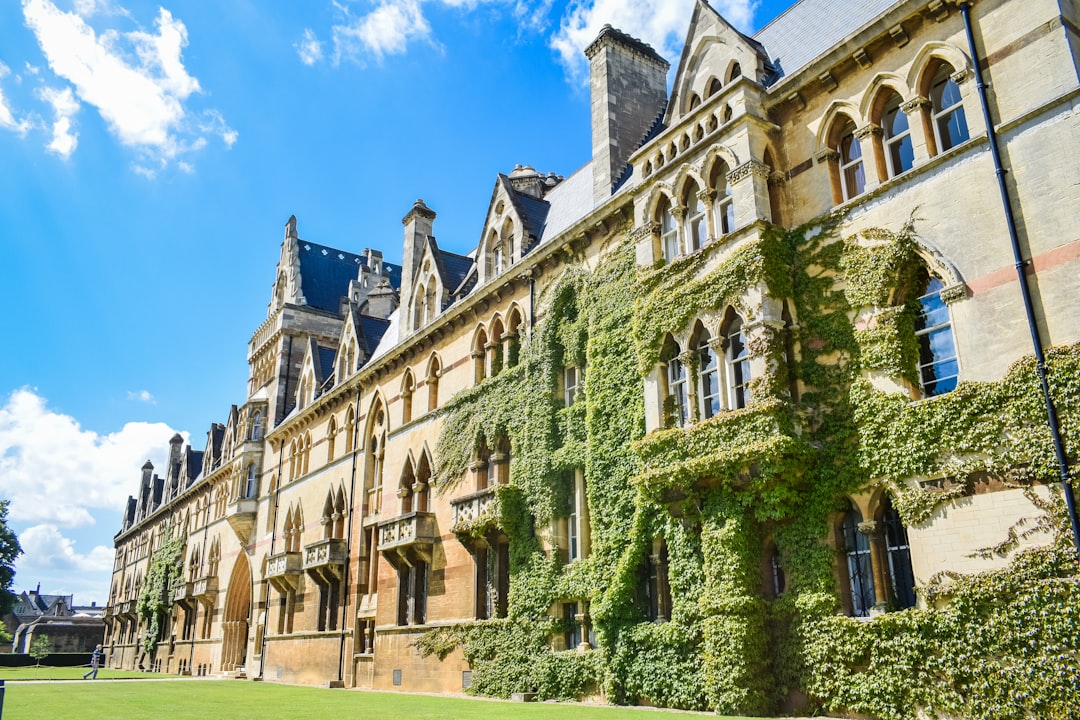
What would happen if we started over? If we wiped the slate clean. IF there were no inherited policies, no century-old traditions, no “we’ve always done it this way”, and we built a university designed for students, educators, and the societies of today?
This isn’t meant to be a financial blueprint. It isn’t limited by budgets, funding models, load targets, business cases, or spreadsheets. Those factors matter, but they aren’t the focus of this thought experiment.
Instead, this explores principles: what higher education could look like if we built a university today intentionally, rather than following the inheritance that continues to limit and restrict the sector.
Universities are remarkable institutions, yet they are layered with practices accumulated through history rather than intentional structure. By imagining a fresh start, we can see more clearly what still serves us, what no longer does, and what is missing.
What We’d Keep
Disciplinary Expertise
Any new university must maintain strong disciplinary knowledge. Experts who think critically, interpret, create, challenge, and lead inquiry continue to be vital for quality and credibility.
Research Culture…But Broader
Research should be central to a university, but not only through traditional publication methods. A redesigned university would adopt practice-led inquiry, community-engaged scholarship, and more importantly, the Scholarship of Learning and Teaching (SoTL).
What We’d Leave Behind
Point-in-Time Assessment
High-stakes, isolated assessments distort learning. A modern university would adopt iterative, authentic, feedback-rich approaches with fewer grades and more opportunities for student growth.
Rigid Semesters and Industrial Timetables
The 12-week semester is a relic of administrative convenience. Instead, we would adopt flexible, intensive, hybrid-first structures aligned to how students actually learn today.
Promotions Based Only on Research
This distortion has long undermined teaching quality. A new model would recognise teaching expertise, educational leadership, and student-impact work alongside research. It would promote an approach where all educators are valued for their diverse contributions at various stages of their careers.
Compliance for Compliance’s Sake
Governance should foster learning rather than clutter it with forms, templates, and reporting rituals. The new university would simplify these systems to ensure compliance is meaningful, not performative.
What We’d Add
Professional Learning as Core Academic Work
One of the great contradictions of higher education is that academics are often expected to teach without being taught how to teach.
In a redesigned university:
- Staff complete pedagogical training before leading classes
- Early-career academics begin through team teaching only
- Professional learning is continuous and scholarly
- Peer observation is normalised and non-punitive
- Communities of Practice are developed and institutionally supported
Team Teaching as the Norm
This would not be a luxury, but rather an essential strength. Students hear multiple voices, perspectives, and explanations. Academics share responsibility, avoid burnout, and learn from each other in real time, both about disciplinary knowledge but also teaching practices.
Universal Design for Learning (UDL) as Foundation
A modern university designs for inclusion from the start, offering multiple ways for students to engage, access content, and show understanding.
AI as a Tool, Not a Learning Pathway
While AI can support admin efficiency, writing assistance, and multimodal explanations, algorithmic personalised learning brings risks: narrowing thinking, reducing productive struggle, and embedding bias.
In a future university, personalisation would remain human-led, with AI augmenting, not directing learning.
SoTL as a First-Class Citizen
In the new university, SoTL is integrated into workload, recognition, and promotion. It drives ongoing improvement. It is a core component of all decisions related to course development, enhancements, and institutional policies that impact student learning. No longer the lonely sibling of research.
A University Worth Inheriting
Reimagining a university from the ground up highlights how much of our current system is based on habit rather than purpose. Funding models or budgets don’t constrain this short thought experiment. Principles guide it. These principles point towards a future that maintains disciplinary expertise and curiosity, abandons outdated structures, and introduces what truly enhances learning: professional learning, team teaching, inclusive design, and thoughtful use of AI.
- From the institutional perspective, this future demands clarity and capability-building.
- From the academic perspective, it replaces survival mode with collaboration and growth.
- From the student perspective, it promises a richer, more authentic, more humane learning experience.
And while this imagined university doesn’t exist yet, many of its features can start now. In one block, one unit, one teaching team, one assessment redesign, one professional learning conversation. Small steps can be taken today to begin this change.
A university built for the future isn’t a demolition project. It’s an act of ongoing stewardship. This means the bigger question isn’t whether we can build it, but whether we will choose to.
Reflections
- Which current university practices do we retain solely because they are familiar, rather than effective?
- If teaching expertise were valued as highly as research, how would our professional culture shift?
- Which inherited structure (assessment, timetable, promotion, governance) would you remove first if starting from scratch?
- How can we incorporate elements of this “future university” into a single class, unit, course, discipline, or team right now?
- What part should AI have in learning and where should human judgment stay key?