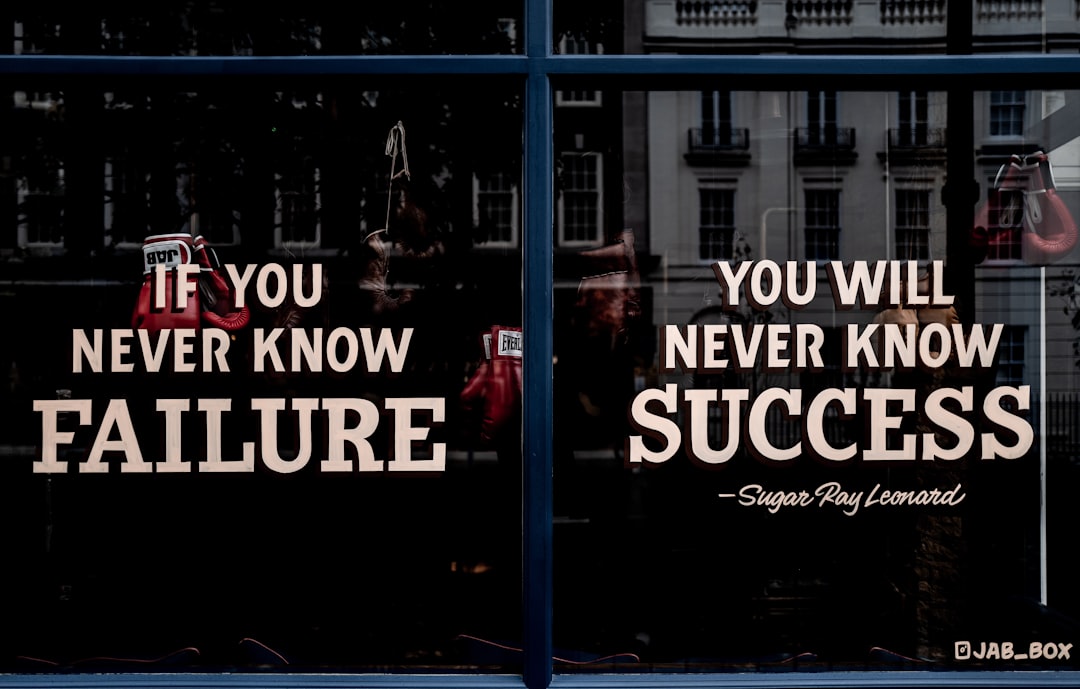
Watch anyone engaged in genuine learning, whether it’s a child wobbling on their bike, a filmmaker wrestling with an edit, or a student drafting an essay, and one thing becomes clear: learning is messy. It’s tangled, unpredictable, and full of false starts. The progress of learning never moves in a straight line. Instead, it loops, dips, accelerates, stalls, and pivots.
Yet somewhere along the way, higher education built systems that expect students to learn neatly. We reward polish, certainty, and correctness. We design assessments that favour the final product over the process of learning that created it. In recent years, GenAI has made this limitation quite clear.
But the reality is far less orderly. Learning is not linear. Students do not arrive as blank slates.
They bring diverse backgrounds, prior knowledge, cultural perspectives, and lived experiences. These influence the paths they take in learning, including moments when things don’t quite go to plan. No two students navigate content in the same way, at the same pace, or from the same starting point. And this variation is not a problem to be fixed; it is the very essence of learning.
So what if the moments we label as “failure” are not failures at all? What if they are simply visible points in the learning process?
The Problem with How We Define Failure
Students are conditioned early in education to see failure as something to avoid. Educational institutions reinforce neatness, correctness, and the idea of a single “right” pathway. By the time students reach university, many have learned to hide uncertainty, avoid risks, and only present what seems complete.
Assessment practices frequently reinforce this tendency. Grades tend to favour correctness and penalise mistakes, prompting students to focus on accuracy instead of exploration. Consequently, a performance culture develops where success is measured by correctness rather than true understanding.
However, this presents a core issue: students give answers but do not reveal their thought process. It is that thinking, often partial, developing, and occasionally conflicting, that is most significant.
When students feel they must avoid being wrong or making mistakes, they hide the very processes that lead to learning.
Learning Is Messy
Learning doesn’t follow a straightforward, linear path. It is a process of iteration, involving attempts, reflection, adjustments, and repeated efforts. What we often interpret as a failure is actually a sign that learning is taking place.
Research in learning science shows that when we face something that doesn’t work, the brain becomes more engaged. We pause. We reflect. We reorganise what we think we know. This is where deeper understanding begins.
What we call “failure” is often simply a moment when thinking becomes visible. And this visibility matters. Because without it, there is nothing to question, nothing to refine, and nothing to build on.
When Things Don’t Work, We See How Students Think
Because students arrive with different experiences and prior knowledge, the moments when things don’t work are never identical. Each one reflects a unique pathway through learning.
One student might be encountering a concept for the first time. Another may be applying knowledge from a different discipline. Yet another might be working from an incomplete understanding or assumptions that made sense in a prior context.
These moments are not deficits. They are insights.
They enable us to analyse the thinking behind a response. To follow the thought process, identify where ideas connect or diverge, and understand how a student makes sense of the material, the concept, or the discipline.
A correct answer can conceal this complexity. Yet a moment of “not quite working” reveals it.
It’s in this moment that space opens for dialogue. We can explore different approaches, question assumptions, and consider multiple ways a process might develop. Learning becomes something we examine together rather than something we judge from afar.
Creating Classrooms That Make Space for Learning
If we accept that learning is messy and non-linear, then our classrooms need to reflect this reality. Environments that prioritise experimentation, active learning, and participation create space for students to engage with uncertainty.
In these spaces, students can test ideas, share incomplete thinking, and learn through doing. They can explore different pathways, compare approaches, and refine their understanding over time.
This is a significant change that shifts the emphasis from performance to process. It emphasises that understanding evolves through cycles, rather than a one-time event. Learning, therefore, is seen as a continuous process involving engagement, reflection, and revision. This approach enables students to perceive learning as a dynamic activity instead of a static one.
And importantly, it creates the conditions for moments of confusion or missteps to surface early, so they can be used productively as part of the student’s learning journey.
Rethinking Assessment as Part of Learning
Assessment also plays a critical role in how students experience these moments. When assessment is positioned as a final judgement, students are less likely to take risks or reveal uncertainty. When it is positioned as part of the learning process, those same moments become opportunities for growth.
Approaches that incorporate drafts, feedback, and reflection acknowledge that learning evolves over time. They allow students to revisit their work, respond to feedback, and deepen their understanding.
Narrative feedback is an example that helps students understand not only what needs to improve but also why and how their thinking is evolving. This isn’t about lowering expectations; it’s about recognising that meaningful learning takes time, iteration, and space.
A Final Reflection: What If We Saw It Differently?
Higher education often aims for clarity, precision, and excellence. These are important goals. But they cannot be realised by ignoring how learning actually happens.
Learning is messy. It is non-linear. It unfolds differently for every student.
The moments we most likely to label as “failure” are usually the moments when thinking is at its most active, with ideas being tested, challenged, and reshaped.
What if these moments weren’t endpoints at all? What if they were beginnings or just natural pauses in an ongoing learning journey?
Because when we examine it closely, what we call failure is rarely the absence of learning. More often, it shows that learning is already underway.
Reflection Questions
- Consider your own teaching or learning environment. Where might students conceal their thinking to avoid admitting they’re “wrong”? How could things change if those hidden moments were brought to light?
- How do your current assessment practices reflect what is valued? Do they signal correctness or the learning process? What small changes could better acknowledge iteration and development?
- When students get something “wrong,” how often do we explore the reasoning behind it instead of just correcting it? What chances for deeper learning might we be missing?
- How do your classroom practices foster or restrict space for experimentation, uncertainty, and active engagement with ideas?
- If learning is messy and non-linear, how can your teaching better support the various paths students take? Especially those whose prior knowledge or experiences influence their learning differently.
Latest Posts
- Beyond Four Walls: Rethinking Learning Spaces in Higher Education
- The Assessment Illusion: Why Precision in Grading is a Myth

- Innovation in Higher Education: Beyond Technology and Buzzwords
- The LMS Divide: Should Online and In-Person Students Have Different Access?

- Teaching as Performance vs Teaching as Design